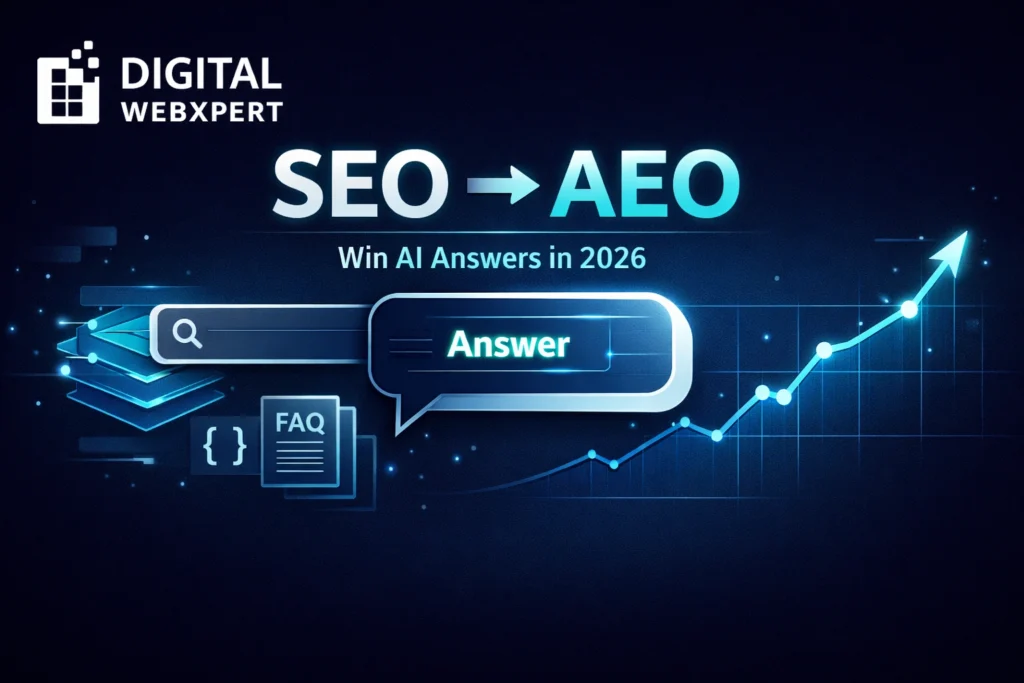
Answer Engine Optimization (AEO) is quickly becoming the next phase of search visibility. Why? Because modern search experiences are increasingly designed to answer the user instantly—often before they ever click a blue link. If your content is clear, structured, and trustworthy enough to be extracted and cited, you’ll earn visibility inside AI-driven answers. If it isn’t, you may still “rank”… but get overlooked.
In this guide, you’ll learn what AEO is, how it differs from traditional SEO, and the 9 practical AEO moves you can implement to improve your chances of being referenced in AI answers, featured snippets, and conversational search experiences.
Related reading: If you’re new to AI-driven search, start here: What are AI Search Engines and Why They Matter.
What Is Answer Engine Optimization (AEO)?
Answer Engine Optimization (AEO) is the process of optimizing your content so search platforms can deliver it as a direct answer—not just list it as a link. AEO focuses on question-based queries, concise answer formatting, structured data (schema), and credibility signals that help systems understand and trust your content.
Google has also published guidance for site owners about how AI features may use and present content in experiences like AI Overviews and AI Mode. It’s worth reading their official documentation: AI features and your website (Google Search Central).
Why SEO Is Shifting Toward AEO
1) Search results are becoming “answer-first”
Google has been expanding generative AI experiences in Search, including AI Overviews, which are designed to summarize information and provide links to explore further. See Google’s official announcements for context:
Generative AI in Search (May 2024) and AI Overviews update (May 2024).
2) “Zero-click” behavior is rising
When users get a complete answer on the results page, fewer clicks happen—especially for informational queries. That doesn’t mean your business can’t win. It means your content must be the best source to quote, cite, and summarize.
3) Clarity and trust matter more than ever
Answer engines look for information they can reuse confidently. That pushes brands toward tighter structure, real-world expertise, and cleaner technical foundations.
AEO vs SEO: What Actually Changes?
- Traditional SEO: compete for rankings; optimize pages around keywords and links.
- AEO: compete to become the extracted answer; optimize around questions, entities, structured responses, and trust signals.
Important: AEO doesn’t replace SEO—it builds on it. The best strategy is “SEO + AEO” together.
9 Powerful AEO Moves You Can Implement Now
1) Build a Question-First Keyword Map
Start with the questions your audience asks (and types into AI tools). Then cluster them by intent:
- “What is…” (definitions)
- “How to…” (steps/process)
- “Best…” (recommendations)
- “X vs Y” (comparisons)
- “Cost of…” (pricing/estimates)
Instead of creating one page per keyword, create one page per question cluster. This improves topical depth and makes it easier for answer engines to extract context.
2) Add an “Answer Block” in the First 10% of the Page
Answer engines love fast clarity. Include a short “definition + outcome” paragraph near the top.
Example Answer Block:
Answer Engine Optimization (AEO) is optimizing content so AI-driven search experiences can pull a direct, accurate answer from your page. It focuses on question-based structure, clean formatting, and trust signals so your content can be cited in AI Overviews, featured snippets, and conversational search.
3) Write Extraction-Friendly Headings
Vague headings make your content harder to reuse. Replace generic headings like “Overview” with headings that clearly match user intent:
- Good: “What Is Answer Engine Optimization (AEO)?”
- Good: “How to Optimize Content for AI Answers”
- Not great: “Things to Know”
Also keep paragraphs short, use bullet lists, and make key takeaways easy to scan.
4) Use Schema Markup the Right Way
Structured data helps platforms interpret your content. Google recommends JSON-LD and provides policies/guidelines for structured data eligibility. Start with:
- Article schema for blog posts
- FAQPage schema for true FAQs
- HowTo schema for step-by-step tutorials
Useful references:
Intro to structured data and Structured data policies.
Note: Google’s FAQPage documentation includes eligibility and content guidelines—use FAQs only when they truly fit your page.
5) Strengthen Entity Signals (So You’re a “Known Source”)
Answer engines don’t just “rank pages”—they understand entities like brands, people, and services. Improve your entity clarity by:
- Keeping brand name, logo, and contact details consistent
- Using a real author bio with expertise
- Linking to your About page and service pages
- Including examples, screenshots, and original insights
Improve trust signals with: About Digital WebXpert.
6) Win Featured Snippets (Because They Feed “Answer-Ready” Content)
Featured snippets reward clear definitions and structured steps. Use:
- Definition + 3–5 bullets
- Numbered steps (when appropriate)
- Short comparisons (AEO vs SEO)
Even when AI answers appear, snippet-friendly formatting increases your chance of being referenced and clicked.
7) Optimize for Conversational Search (Chat-Style Queries)
People ask assistants differently than they type into search. Add H3 questions that match natural language, like:
- “How do I get my website mentioned in AI answers?”
- “What content format works best for AEO?”
Then answer each in 40–70 words before expanding.
8) Build “Proof of Usefulness” Into the Content
Clear structure is not enough. Answer engines prefer content that feels reliable. Add:
- Updated timestamps (“Updated for 2026”)
- Specific scenarios (local business, ecommerce, B2B)
- Process details (how you do it, not just what it is)
- Helpful internal pathways to services
If you want AEO + AI search visibility support, explore: Digital WebXpert Services.
9) Measure AEO Outcomes (Not Just Rankings)
AEO success isn’t only “position.” Track:
- Search Console queries that look like questions
- Featured snippet wins/losses
- Brand mentions and assisted conversions
- Performance changes on pages likely to appear in AI answers
Also read our AI visibility guide: Proven Strategies to Rank Higher on Google AI, ChatGPT & Perplexity.
A Simple 30-Day AEO Action Plan
Week 1: Fix What You Already Have
- Add Answer Blocks to your top 5–10 informational pages
- Rewrite headings to match real questions
- Improve internal linking between related topics
Week 2: Add Structured Sections
- Create FAQ sections where users genuinely ask repeated questions
- Implement Article schema + (optional) FAQ schema
- Strengthen About/Contact/Author credibility
Week 3: Publish AEO-First Content
- Write 2–4 question-cluster posts (definition, how-to, comparison)
- Add comparison blocks (AEO vs SEO)
- Include real examples and next-step CTAs
Week 4: Review + Improve
- Find pages with high impressions but low CTR
- Refine Answer Blocks and snippet formatting
- Expand sections that users keep asking about
Want help implementing this roadmap? Start with our AI search readiness article:
Top 5 Ways to Prepare for the Google AI Search Revolution.
FAQ: Answer Engine Optimization (AEO)
What’s the difference between AEO and SEO?
SEO focuses on ranking pages in search results. AEO focuses on making your content easy for AI and search platforms to extract as the direct answer—often using clear formatting, question-based sections, and strong trust signals.
Does AEO replace SEO?
No. AEO is the next layer on top of SEO fundamentals. Without solid technical SEO and authority, your content is less likely to be trusted or cited.
Do I need schema to win AEO?
Not always, but schema can help machines interpret your page. Follow Google’s structured data guidelines and only mark up content that truly matches the schema type.
What content formats work best for AEO?
Definitions, step-by-step how-tos, short comparisons, FAQs, and tightly-structured “best practices” lists tend to perform well because they’re easier to extract and summarize.
How can I get help implementing AEO?
Digital WebXpert can help you build AEO-ready content and improve AI search visibility. Contact us here: Book a Free Consultation.
Final Takeaway
SEO is shifting—but it’s not disappearing. The winners in 2026 will be the brands that combine classic SEO strength with AEO structure: clear answers, clean formatting, entity credibility, and smart schema. If your content can be confidently reused as the answer, you’ll stay visible even as the SERP evolves.